
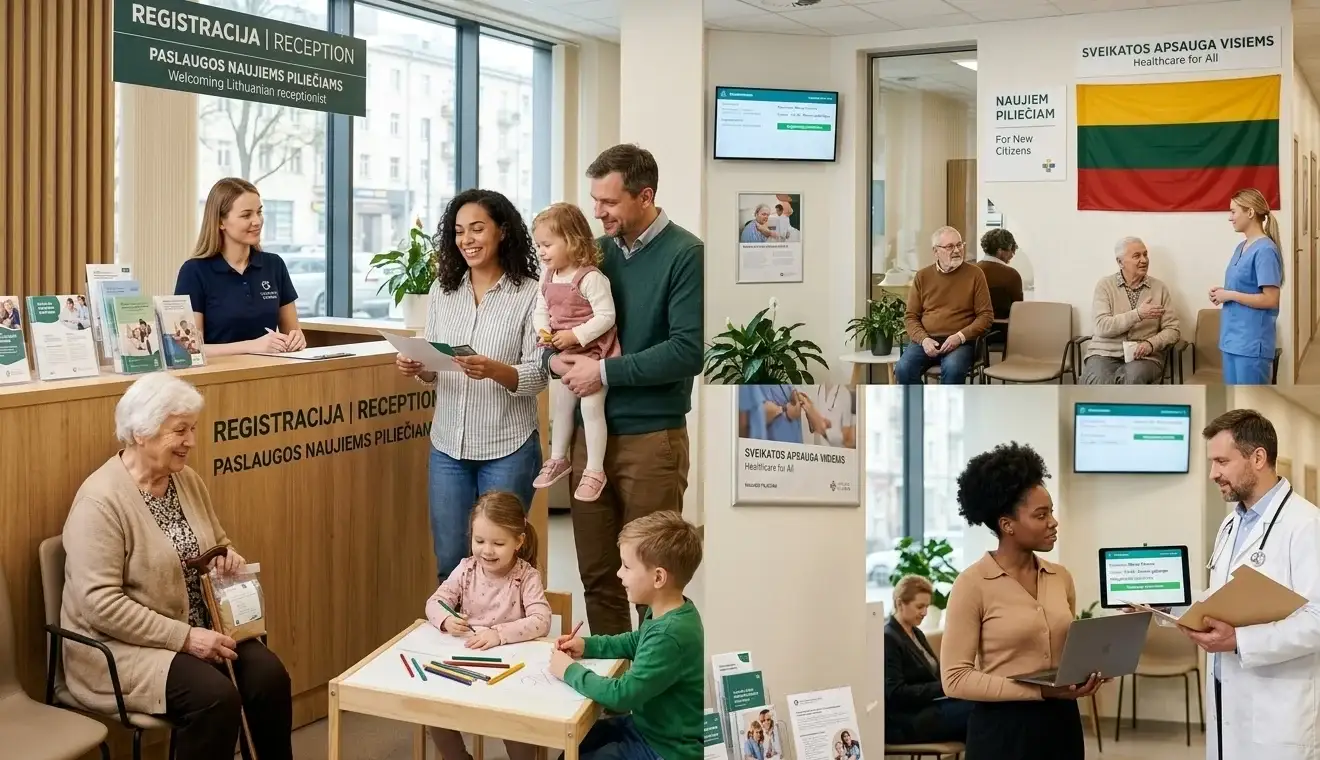
Restoring Lithuanian citizenship can create important new rights, including the ability to live, work and settle in Lithuania and other EU countries. However, citizenship alone does not automatically mean that every medical service in Lithuania becomes free from the day a passport is issued.
Healthcare access for new Lithuanian citizens usually depends on residence, compulsory health insurance status and the person’s broader social security situation. A Lithuanian citizen who lives permanently in the United States may be treated differently from a Lithuanian citizen who has moved to Lithuania, declared residence, started employment and is covered by the Lithuanian compulsory health insurance system.
This guide explains how healthcare access for new Lithuanian citizens generally works, how health insurance in Lithuania is structured, what new residents should understand before using public medical services and when private insurance may still be useful.
Does Lithuanian Citizenship Automatically Give Access to Free Healthcare?
Lithuanian citizenship can give a person the right to reside in Lithuania, but it does not always create immediate access to state-funded healthcare on its own. In many cases, access to reimbursed medical services depends on whether the person is covered by Lithuania’s compulsory health insurance system, known as PSD.
This distinction is especially important for people who restored Lithuanian citizenship by descent while continuing to live abroad. A person may hold a Lithuanian passport but still be insured, taxed and medically covered under another country’s system. If that person visits Lithuania temporarily, their healthcare access may depend on whether they are insured in another EU country, whether they hold an EHIC, whether they have an S1 form, whether they have private travel insurance or whether they are paying for care privately.
For U.S.-based new Lithuanian citizens, the situation can be more complex because the United States is outside the EU social security coordination system. A Lithuanian passport may make entry and residence easier, but medical coverage in Lithuania usually requires separate attention. Before relying on public healthcare, new citizens should confirm whether they are actually insured under PSD or whether they need private coverage for their stay.
How the Lithuanian Healthcare System Works
Lithuania has a public healthcare system supported by compulsory health insurance contributions. The system is designed primarily for insured residents. The National Health Insurance Fund reimburses many healthcare services when they are provided by contracted healthcare institutions and when the patient is properly insured.
The public system includes family doctors, outpatient specialists, hospital treatment, emergency care, reimbursed medicines and certain preventive services. In practice, patients usually begin with a family doctor, who acts as the first point of contact for non-emergency care. Specialist care in the public system often requires a referral, except in situations where direct access is allowed under applicable rules.
Lithuania also has a significant private healthcare sector. Private clinics may offer faster appointments, more flexible scheduling and English-speaking staff in larger cities. However, private care is usually paid directly by the patient unless it is covered by a private insurance policy or by a specific arrangement with the public system.
Compulsory Health Insurance in Lithuania
Compulsory health insurance in Lithuania is commonly referred to as PSD. It is not the same as optional private medical insurance. PSD is part of the public insurance system and is tied to a person’s legal, employment, residence or social security status.
For employed residents, PSD contributions are usually handled through payroll. For some self-employed persons, unemployed residents or people who are not covered by the state, monthly payments may need to be made separately. Some categories of residents may be insured by the state, depending on their situation, such as certain pensioners, registered unemployed persons, students or other protected groups.
New Lithuanian citizens should not assume that they are automatically active in the PSD system just because they have received citizenship. The practical question is whether their insured status is visible and valid in the Lithuanian system at the time they seek care.
Healthcare Access for Citizens Living Abroad
Many people who restore Lithuanian citizenship by descent continue living in the United States, Canada, the United Kingdom, Australia or another country. In those situations, Lithuanian citizenship may be relevant for travel and residence rights, but it does not necessarily replace the person’s existing healthcare arrangements abroad.
A new Lithuanian citizen living in the United States will usually still need U.S. health insurance for healthcare in the United States. If they travel to Lithuania temporarily, they may need travel medical insurance or private coverage unless they are covered through another recognized mechanism. Because the United States is not part of the EU healthcare coordination framework, U.S.-based citizens should be especially careful about assuming that EU-style healthcare documents will apply to them.
For citizens living in another EU or EEA country, the analysis may be different. Healthcare coverage may depend on where the person works, where they reside, where they pay social security contributions and whether they hold documents such as an EHIC or S1 form. In EU coordination rules, nationality is not the only factor. Residence and economic activity often matter more.
Moving to Lithuania After Citizenship Restoration
A new Lithuanian citizen who plans to move to Lithuania should treat healthcare registration as part of the relocation process. Declaring residence, arranging employment or self-employment status, checking PSD obligations and choosing a primary healthcare provider can all affect practical access to medical services.
Once a person becomes resident in Lithuania, they may become responsible for PSD contributions unless they fall into a category insured by the state. If they work for a Lithuanian employer, contributions are generally handled through employment. If they are self-employed or not otherwise covered, they may need to arrange payments themselves.
This is one of the most common misunderstandings among returning citizens. Declaring residence can create access to the Lithuanian system, but it can also create payment obligations. If a person later leaves Lithuania, they should also review whether they need to declare departure or update their status to avoid unnecessary PSD obligations.
Registering with a Family Doctor
For routine medical care, residents usually register with a primary healthcare institution and choose a family doctor. This doctor is the main entry point into the public healthcare system. They can provide initial consultations, prescribe medication, order basic tests and issue referrals when specialist care is needed.
New citizens who are used to healthcare systems where patients can directly book many specialists may find this structure unfamiliar. In Lithuania, the family doctor often plays a gatekeeping role. For non-emergency specialist consultations covered by the public system, a referral may be required.
Registering with a clinic is therefore one of the most practical steps after moving to Lithuania. Without a chosen primary healthcare provider, even insured residents may find it harder to access non-emergency care efficiently.
Public Healthcare vs Private Healthcare in Lithuania
Public healthcare in Lithuania can be affordable for insured residents, but waiting times may vary depending on the city, specialty, clinic and urgency of the condition. Emergency and urgent care are treated differently from routine specialist consultations. A serious acute condition may be handled quickly, while non-urgent specialist appointments can take longer.
Private healthcare is widely used by both locals and foreigners, especially in Vilnius, Kaunas and other larger cities. Private clinics may be useful for faster diagnostics, second opinions, dental care, preventive checks and consultations where waiting several weeks or months is inconvenient.
However, private care is not automatically reimbursed just because a patient is a Lithuanian citizen or PSD-insured resident. Before booking a private appointment, patients should check whether the provider has a relevant contract with the public system and whether the specific service is reimbursed. Otherwise, they should expect to pay privately.
Private Health Insurance for New Lithuanian Citizens
Private health insurance can still be useful even for people who are eligible for the Lithuanian public system. It may cover faster access to private specialists, broader diagnostic packages, dental services, physiotherapy or other services not fully covered by PSD.
For new citizens who live outside Lithuania, private travel or international health insurance may be particularly important during temporary stays. For people relocating to Lithuania, private insurance can help during a transition period before their public coverage is active or while they are learning how to use the system.
Private insurance should not be confused with PSD. PSD is the foundation of access to many state-reimbursed services in Lithuania. Private insurance is usually supplementary, optional and dependent on the terms of the policy.
Digital Healthcare and E-Health Services
Lithuania uses digital systems for many healthcare processes, including electronic prescriptions, referrals and medical records. New residents may need access to Lithuanian electronic identification tools or other accepted login methods to use online services efficiently.
This can be an adjustment for newly restored citizens who have not previously lived in Lithuania. Administrative access, identity verification and digital literacy can matter almost as much as the insurance rules themselves. Without the ability to log in and check information, it may be harder to monitor insured status, prescriptions, referrals or medical history.
Anyone planning a long-term move should prepare for the digital side of the system early. This may include arranging local identification tools, understanding how to access state portals and confirming that personal data is correctly registered.
Common Mistakes New Lithuanian Citizens Should Avoid
One common mistake is assuming that citizenship and healthcare coverage are the same thing. They are related, but not identical. Citizenship may support the right to live in Lithuania, while healthcare coverage depends on insurance status and applicable social security rules.
Another mistake is moving to Lithuania without checking PSD obligations. A person who becomes resident may need to pay contributions or confirm that they are insured through employment, state coverage or another valid category. Ignoring this can create gaps in access or unexpected debts.
A third mistake is relying only on private assumptions about how EU healthcare works. EU social security coordination can be helpful, but it depends on specific facts. A person’s country of residence, employment, pension status and insurance documents can all affect the answer.
New citizens should also avoid waiting until they are ill to understand the system. It is better to check insurance status, register with a family doctor and understand emergency procedures before medical care is needed.
Practical Steps Before Using Healthcare in Lithuania
Before relying on the Lithuanian public healthcare system, a new citizen should confirm whether they are insured under PSD or covered by another valid mechanism. They should also check whether their residence status, employment situation and declared address are correctly reflected in Lithuanian systems.
After moving to Lithuania, it is usually sensible to register with a primary healthcare provider, choose a family doctor and learn how referrals work. If the person expects to need regular specialist care, prescriptions or treatment for a chronic condition, they should plan ahead rather than wait for an urgent situation.
For temporary visits, especially from outside the EU, private travel medical insurance may be necessary. For longer stays, the person should review whether they are becoming resident in Lithuania and whether PSD contributions apply.
Why Healthcare Planning Matters After Citizenship Restoration
Lithuanian citizenship restoration can be a major step for people with Lithuanian ancestry. It may create new opportunities for residence, work, study and travel within the EU. However, practical life in Lithuania involves more than receiving a passport.
Healthcare is one of the most important areas to clarify before relocation. The right approach depends on whether the new citizen is visiting Lithuania temporarily, moving permanently, working locally, retiring, studying, living in another EU country or continuing to reside in the United States.
Because these situations differ, healthcare access for new Lithuanian citizens should be reviewed individually. The safest approach is to confirm insured status before seeking non-emergency care and to keep private coverage in place until public coverage is clearly active.
FAQ
Do new Lithuanian citizens get free healthcare automatically?
Not always. Lithuanian citizenship alone does not necessarily activate access to free public healthcare. In many cases, state-funded healthcare depends on whether the person is insured through Lithuania’s compulsory health insurance system or covered under another applicable arrangement.
What is PSD in Lithuania?
PSD is Lithuania’s compulsory health insurance system. It helps fund public healthcare and allows insured persons to access many reimbursed medical services through contracted healthcare providers. Depending on the person’s status, PSD may be paid through employment, paid individually or covered by the state.
Can a Lithuanian citizen living in the United States use Lithuanian healthcare for free?
Usually, a Lithuanian citizen living in the United States should not assume they can use Lithuanian public healthcare for free during a temporary visit. Their access may depend on insurance status, residence, private coverage and the type of medical service needed.
Do I need private health insurance after restoring Lithuanian citizenship?
Private health insurance may be useful, especially if you live outside Lithuania, are visiting temporarily or are in a transition period before public coverage is active. Even residents covered by PSD may use private insurance for faster appointments or services not fully covered by the public system.
How do I access doctors after moving to Lithuania?
After moving to Lithuania, you should confirm your insured status and register with a primary healthcare provider. A family doctor usually becomes your first point of contact for routine care and referrals to specialists within the public system.
Is emergency care available in Lithuania?
Emergency care is available in Lithuania, but coverage and payment rules can depend on the person’s insurance status and circumstances. Temporary visitors should have appropriate insurance, while residents should make sure their PSD coverage is active.
Can I use an EHIC in Lithuania?
An EHIC may help eligible persons insured in another EU or EEA country access necessary healthcare during a temporary stay in Lithuania. It is not a replacement for full local health insurance when a person moves residence or becomes subject to Lithuania’s own healthcare system.
What should new Lithuanian citizens check before relocating?
New citizens should check residence declaration rules, PSD obligations, employment or self-employment status, family doctor registration, digital access to health services and whether private insurance is needed during the transition.