
Global mobility by 2026: The legal structure for your family
How not to lose your Lithuanian citizenship eligibility and recognize the factors that indicate its presence? Global mobility by 2026 will be entirely dependent on legal structures that you create for your family. Getting European passports for yourself is huge accomplishment, but you put future generations dramatically at risk by not providing them with same level of citizenship. Founders and expats often visit our law firm and ask the question: can you pass on Lithuanian citizenship to children? Most expect simple yes or no answers. Reality is that answers depend on many things, including strict timing, exact documentation, and how Migration Department currently interprets laws on citizenship. We are going to discuss exact legal mechanics that will dictate whether or not you have passed Lithuanian citizenship down to children for generations to come. No grey advice; simply unaltered facts of law.
Can you transfer Lithuanian Citizenship to children? All bureaucracies operate on facts. There are no assumptions or requests to grant citizenship or transfer status to children without evidence. For most cases, Lithuanian dual citizenship children of dual citizens is a prospect, but how to get the most out of it at the legal level? You need to show proof of every single biological and legal link connecting children to state.
Citizenship by descent rules in Lithuania
European citizenship laws are governed by principle known as jus sanguinis, or citizenship by virtue of blood lines regardless of where individuals were born or currently reside. Therefore, if you possess active Lithuanian passports, this signifies that your blood has been linked with sovereignty of Lithuania worldwide. This system is extremely effective and efficient way for diaspora members to maintain legal ties to Lithuania through many generations. However, laws do not simply provide this benefit without actions to register births in government registries. Having waited years to obtain documentation makes it exponentially slower to process paperwork, thus descendants will be faced with navigating vast historical archives rather than just looking within modern registries.
When children automatically receive citizenship
Here law has no uncertainty whatsoever. Infants acquire citizenship from parents at any location where they are born if parents are certified citizens of Lithuania at time of birth. It does not matter whether birth took place in Vilnius, New York City, or Dubai. Location of physical birth has no legal significance. Infants will be recognized as citizens of Lithuania from time they take first breaths. Nevertheless, children will still have to undergo formal administration procedures to produce valid passports and personal identification numbers for purposes of international travel.
Lithuanian Citizenship for Minors Explained
Can you pass Lithuanian citizenship to your children? Understanding nuances of law is critical factor in distinguishing between successful applicants and applicants that have been denied after years of waiting in administrative limbo.
Children born to Lithuanian national parents living abroad
Parents of Lithuania citizens who give birth outside EU often worry they are going to be diluting legal rights of children by choosing to give birth in foreign countries. This is not true. If both parents have final, valid Lithuanian citizenship at time of birth, then obtaining Lithuania citizenship for children born outside Lithuania has become very straightforward process. Main issue most times is completing official process of translating and legalizing birth records and medical records, in compliance with civil registry’s very strict requirements. In addition, you must make state aware of existence of new Lithuanian citizens, as government of Lithuania does not track foreign hospital records automatically.
Cases where citizenship is not automatic
When naturalization timelines fail to be legally correct, bad things happen! If you go through process of requesting decrees from government to restore citizenship obtained through lineage, and children are born before decrees are received, children have NO inherent right to citizenship by way of birth! Because you are NOT technically citizens at time of birth since you don’t have decrees from government, children must utilize completely different legal processes to obtain passports. Timing is single most legally significant aspect of immigration law, so you must carefully plan family immigration plans and legal processes.
For many modern families, possibility of holding multiple passports has changed dramatically over past several years, giving thousands of families options that would otherwise have resulted in impossible choices.
Children born to Dual Citizens of Lithuania
Prior to extensive change in law made by legislation in 2021, families were faced with agonising choices regarding having multiple passports. Current rules governing dual citizenship for children of dual citizens are now very favourable and highly protective. For example, if children are born as Lithuanian citizens and obtain some other nationality before age of 18, then children have right to keep both citizenships for entire lives. They do not have to give up either citizenship when they become adults. This gives ultimate generational leverage.
Restrictions and exceptions under Lithuanian law
This leniency is not applicable to adults. Exception only applies to minors that acquired status prior to age 18. Adult Lithuanian citizens who voluntarily acquire citizenship in another country lose Lithuania passports unless they meet specific requirements of historical exceptions pertaining to Soviet and Nazi deportations. Dual nationality provisions are intended only to protect fundamental rights of minor children born in globally mobile families with mixed nationality and to ensure that minor children have no legal ramifications as result of parents’ geographic choices.
Step-by-Step Application Process
If you’re unorganized person, bureaucratic systems will come down hard on you. Each and every step in applications must be executed with military precision or risk being denied.
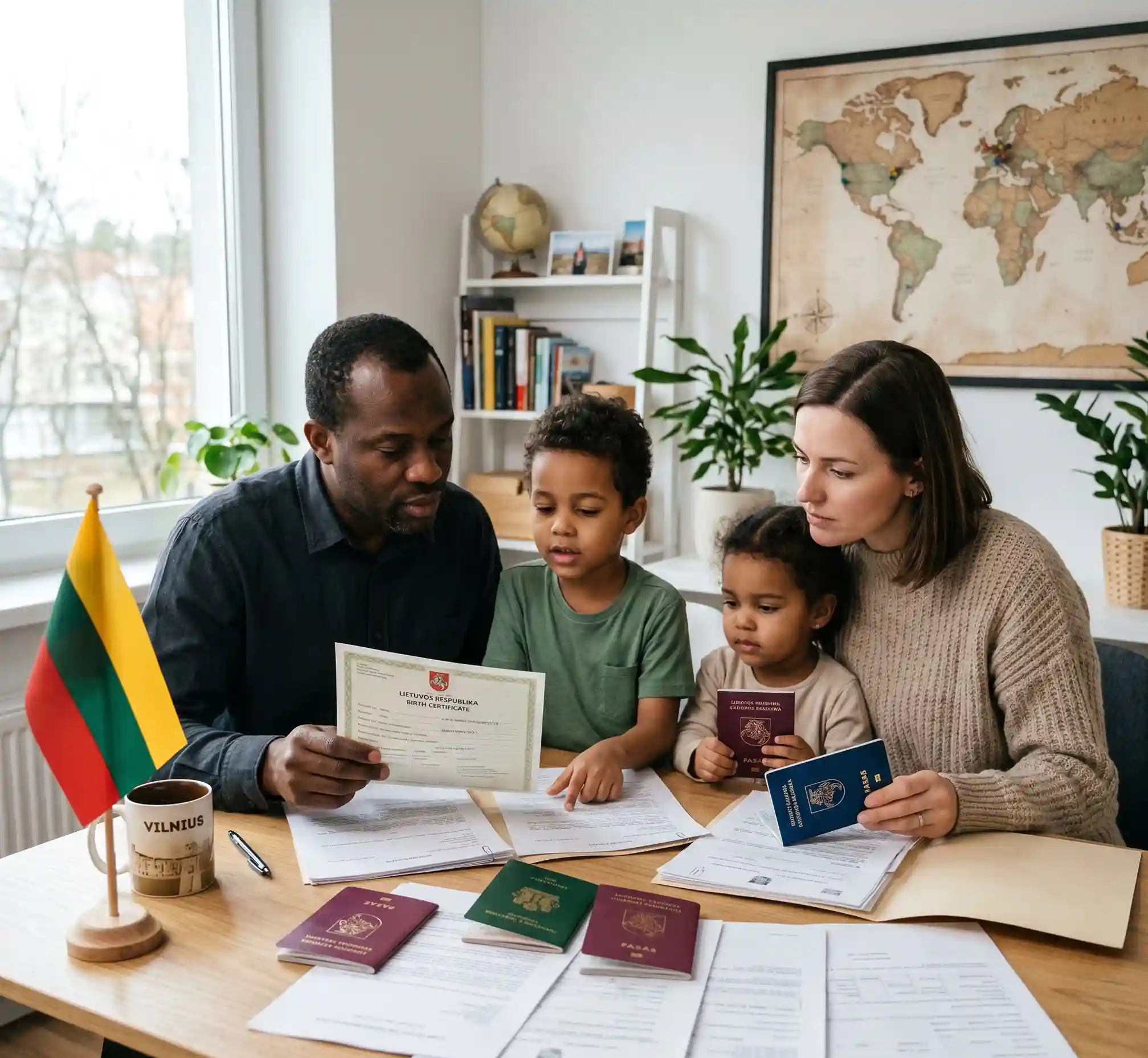
Simply mailing birth certificates and expecting to receive passports is not sufficient. In order to obtain Lithuanian citizenship for children, authorities must go through sequential administrative process. First step is to register foreign-born children’s births with Lithuanian Civil Registration Office and obtain personal identification codes. Once births have been registered and placed into databases, you will move to Immigration offices to file actual applications for passports or ID cards. Bypassing civil registration step will lead to automatic denial of passport or ID applications.
Where to apply (embassy, migration office)
Advent of digital infrastructure has made it much easier to go through this process. First part of birth registration can happen at any time remotely via MIGRIS online system. However, while you will be registering children through online MIGRIS system, physical passports will still require that you have appointments for biometric reviews for children to be present in person at Lithuanian diplomatic missions, at consulates, or in person at Migration Department offices in Lithuania. Since consulates located in international cities such as London or Chicago regularly schedule appointments months in advance, obtaining appointments is extremely difficult for busy parents who must schedule visits in advance.
Documents Needed For Child Citizenship Applicants
Migration Department cannot use anything except verifiable documentation. They do not accept sworn statements, copied signed documents or unstamped documents.
Birth Certificates & Parent’s Documents
Applications will depend exclusively on authenticated primary documents. You must provide original foreign birth certificates stating parents’ full names. Valid Lithuanian passports or ID cards of parents transmitting citizenship are required as well. If parents are married, state will also require properly registered and legitimate marriage certificates from Civil Registry of Lithuania before children can begin application process. Without stated primary documents, immigration and naturalization process will stop dead in its tracks.
Proof of Lithuanian citizenship and residency
To apply for citizenship for minor children, parents must establish legal status as of day children were born. If names have changed through marriage and state has not been notified, then you will need to update current administrative records before applying for children’s citizenship. In terms of foreign documents, files will need to contain Apostille/Authentication or Consular Legalization prior to Lithuanian authorities accepting documents as valid and genuine. Without above-mentioned international verification stamps, foreign documents are considered by European Union to not be legal documents.
Common Reasons for Delays or Problems
Many applicants fail to understand legal-process rules and therefore do not have any protection from legal consequences of failing to comply with rules. Very often, those who are unfamiliar with rules fail to follow strict formatting requirements, and as result, they do enormous amount of damage to applications.
If you have applications pending in Lithuania and are applicants with missing documents or inaccurate translations, applications will be denied. All foreign evidence submitted to Republic of Lithuania must be translated into Lithuanian by authorized, certified translators. If there are any discrepancies whatsoever, no matter how small, between English birth certificates and Lithuanian versions, this will result in cases being immediately suspended. Bureaucrats will require you to obtain new translations and new Apostilles. Costs associated with obtaining new translations and Apostilles can drain financial resources and deprive children of legal rights for many additional months.
Dual citizenship complications
Minors have lot of protection from dual nationality, but parents must let local government know when they have obtained foreign passports for children within two months of obtaining them or face consequences under administrative law. They will normally not lose citizenship, but it will alert authorities to families and could complicate future passport renewals. Maintaining complete transparency with government is best defense while obtaining any kind of service provided by government.
Final Checklist for Lithuanian Citizenship for Children
How to apply for lithuanian citizenship for child? Issuing global mobility across generations is more than just weekend project; it will require extensive planning, impeccable record-keeping, and thorough understanding of International Administrative Law to obtain apostilled birth records, translate them correctly, and navigate MIGRIS online portal properly.
If you are part of an internationally mobile workforce who wants to build a family future in Europe without risking repeated rejections from bureaucrats, https://www.lithuaniancitizenship.com/ has experts ready to help you do just that. Legal architects who work with us understand strict regulations of Lithuanian Migration Department and are prepared to help children obtain rights without problems. No need to guess about administrative processes anymore. Provide your family with ability to live and work all over world for many generations into future. Let us help you get started on that path today!