
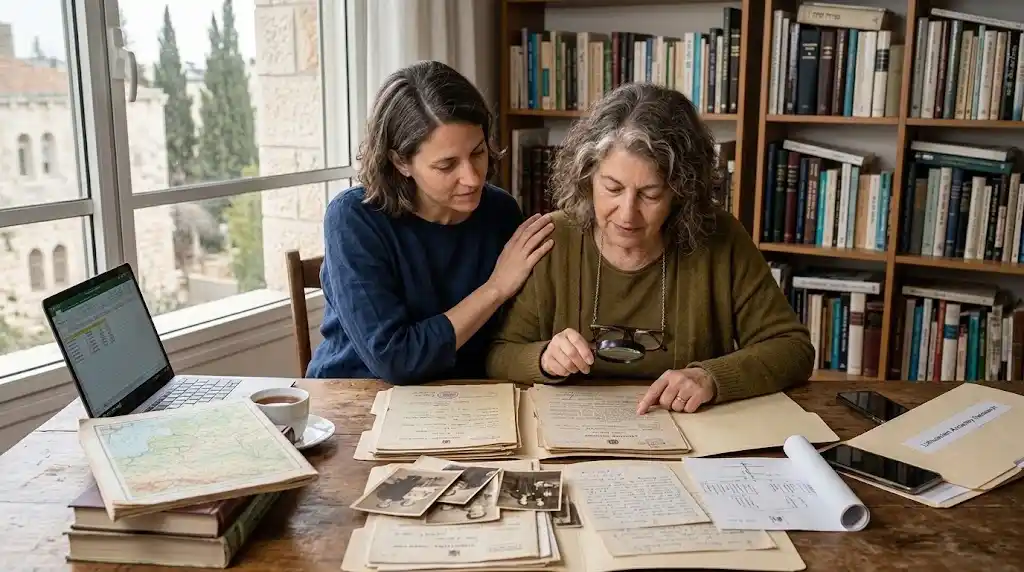
Israeli citizens with Lithuanian parents, grandparents or earlier ancestors may have a potential route to Lithuanian citizenship. However, Lithuanian family roots alone do not establish eligibility. For people researching Lithuanian citizenship by descent Israel options, the key questions usually concern the ancestor’s citizenship status, the relevant historical period and the documents connecting each generation.
Many families in Israel have connections to Lithuania that go back several generations. As a result, assessing Lithuanian citizenship for Israeli citizens may require combining Lithuanian historical evidence with Israeli family records. The circumstances of the ancestor’s departure from Lithuania can also affect which legal route may be available.
Who in Israel May Qualify for Lithuanian Citizenship by Descent?
Eligibility is determined by the individual family history rather than Israeli citizenship itself. When considering Lithuanian citizenship for Israelis, it is important to identify the relevant Lithuanian ancestor, establish that person’s legal status and document the relationship between the ancestor and the applicant.
A parent or grandparent can provide the relevant family connection in some cases, while earlier generations may also be important depending on the circumstances. Applicants researching Lithuanian citizenship Israel possibilities should therefore distinguish between having Lithuanian ancestry and having a legal basis connected with a former Lithuanian citizen.
Descendants of Former Lithuanian Citizens
Descendants of people who previously held Lithuanian citizenship may have a potential basis for restoring citizenship. The applicant generally needs evidence establishing both the ancestor’s status and the family chain connecting each subsequent generation.
The relevant connection may be through a parent, grandparent or another ancestor. Depending on the family history, applicants may therefore need to consider the specific requirements for Lithuanian citizenship through a Lithuanian parent or Lithuanian citizenship through a grandparent.
For Israeli families with Lithuanian Jewish ancestry, historical migration patterns and surviving records can be particularly relevant. Separate legal and documentary considerations may also apply when assessing Lithuanian citizenship for Jewish descendants.
Why the Ancestor’s Citizenship and Date of Departure Matter
Being born in Lithuania or having Lithuanian roots does not necessarily prove that an ancestor was a Lithuanian citizen. The applicant may need historical documents confirming the ancestor’s citizenship status during the relevant period.
The timing and circumstances of departure from Lithuania may also affect the legal assessment. This is why applications based on ancestry often require a reconstruction of the family history rather than proof of Lithuanian origin alone.
For someone exploring Lithuanian citizenship by ancestry Israel options, the important questions are therefore who the relevant ancestor was, whether Lithuanian citizenship can be established and when that person left Lithuania.
What Israeli Applicants Need to Prove
A successful assessment normally requires evidence of two connected elements: the relevant ancestor’s Lithuanian status and the applicant’s documented family relationship to that ancestor. The required evidence can therefore come from both Lithuanian and Israeli records.
Proof of Lithuanian Citizenship and Family Connection
Historical passports, archival records and other official evidence may help establish that an ancestor held Lithuanian citizenship. Civil records can then connect that person to subsequent generations through births, marriages and other documented family relationships.
When original Lithuanian documents have not survived within the family, archival research may be necessary. Depending on what the available evidence establishes, a Certificate of Lithuanian Descent may also be relevant as a separate legal concept.
Name Changes and Differences in Family Records
Differences between Lithuanian and Israeli records are not unusual. Names and surnames may appear in different languages, alphabets or spellings, and family names may also have changed after migration or marriage.
Such differences do not automatically prevent a citizenship case, but the records should allow the authorities to establish that documents with different spellings refer to the same person. This can make records showing name changes and connections between generations particularly important in applications from Israel.
Documents Required for Applicants From Israel
The documents required depend on the applicant’s family history, the Lithuanian ancestor involved and the legal basis of the case. When preparing Lithuanian citizenship documents Israel applicants may need to combine historical evidence from Lithuania with civil records issued in Israel.
The purpose of these documents is to establish the ancestor’s relevant status and create a clear documentary chain between that person and the applicant.
Israeli Civil Documents and Lithuanian Archival Records
Israeli birth, marriage and other civil records may be required to document the relationship between generations. If names or surnames changed over time, additional records may also be necessary to explain those differences.
On the Lithuanian side, archival documents may be used to establish the ancestor’s citizenship or other relevant historical facts. Applicants do not necessarily need to possess an ancestor’s original Lithuanian passport if the required information can be established through appropriate historical records.
Apostille and Lithuanian Translation Requirements
Israeli documents submitted as part of the procedure may need to meet formal requirements before they can be accepted in Lithuania. Depending on the document and applicable procedure, this can include an Apostille and translation into Lithuanian.
Applicants should therefore check the requirements for each document before submission rather than assuming that an Israeli-issued original can be submitted without additional formalities.
How to Apply for Lithuanian Citizenship From Israel
Applicants seeking to restore Lithuanian citizenship from Israel can begin the relevant procedure without relocating to Lithuania. The process generally starts electronically, after the applicant has identified the appropriate legal basis and prepared the supporting evidence.
A Lithuanian citizenship application Israel applicant submits should reflect the documented family history and include the records required for the specific procedure. Electronic submission does not remove the requirement to present original documents when requested.
Application Through MIGRIS
The application is initiated through MIGRIS, Lithuania’s Migration Information System. Applicants complete the relevant electronic application and upload copies of the supporting documents.
MIGRIS is therefore an important stage for applicants pursuing Lithuanian citizenship from Israel, but the electronic application is not the only step. The applicant must also follow the subsequent instructions concerning original documents and verification.
Submission of Original Documents and Embassy Appointment
After the electronic stage, applicants may need to present original documents according to the applicable procedure. For applicants residing in Israel, this may involve an appointment with the Lithuanian diplomatic mission in Israel.
The timing and procedure for presenting originals depend on the instructions provided in connection with the application. Applicants should therefore complete the MIGRIS stage and follow the official instructions before arranging the relevant submission or appointment.
Common Problems in Lithuanian Ancestry Cases From Israel
Citizenship cases involving several generations can become more complex when historical documents are missing or when names changed after migration. These issues do not necessarily end a potential claim, but they can require additional documentary work.
Missing Historical Records
Families may know that an ancestor came from Lithuania without having retained a passport or citizenship certificate. In such cases, Lithuanian archival records may help establish information that is no longer available in family documents.
The absence of an original passport should therefore be distinguished from the absence of evidence altogether. The relevant question is whether the ancestor’s status can be established through other accepted records.
Different Spellings of Names and Surnames
Lithuanian and Israeli records may contain different versions of the same name or surname. Differences can result from transliteration, the use of different alphabets, migration or later changes to a family name.
When this occurs, the documentary chain should make it possible to connect the different versions to the same person. Birth, marriage, name-change and other civil records may be important for establishing that continuity.
When Lithuanian Roots May Not Be Enough
Having Lithuanian ancestry does not automatically establish a right to citizenship. A family connection to Lithuania may be clear, but the relevant ancestor’s legal status and the documentary evidence supporting the claim still need to be established.
This distinction is important when assessing Lithuanian citizenship requirements for Israelis. An ancestor’s place of birth, Lithuanian identity or family origin should not be treated as proof of citizenship on its own. The applicable legal basis depends on the individual family history and the evidence available.
In cases where citizenship restoration is relevant, a Certificate of the Right to Restore Lithuanian Citizenship may also be considered depending on the applicant’s circumstances. Questions concerning the ability to retain another nationality should be assessed separately under the applicable Lithuanian dual citizenship rules.
Frequently Asked Questions
Can Israeli citizens apply for Lithuanian citizenship by descent?
Potentially. Eligibility depends on the relevant ancestor’s status, the applicant’s documented family connection and the historical circumstances of the case. Israeli citizenship itself neither creates nor automatically excludes a possible claim.
Can I apply from Israel without living in Lithuania?
Yes. Applicants may begin the process from Israel and do not necessarily need to establish residence in Lithuania. The Lithuanian citizenship application process can start electronically through MIGRIS, followed by the required procedure for presenting original documents.
Do Israeli documents need an Apostille and translation?
Depending on the document and the applicable requirements, Israeli documents may need an Apostille and translation into Lithuanian before they can be used in the citizenship procedure.
Can I apply without my ancestor’s Lithuanian passport?
Potentially. An original Lithuanian passport is not necessarily the only way to establish an ancestor’s status. Relevant information may also be found in Lithuanian archives or other accepted historical records.
Can I keep Israeli citizenship after obtaining Lithuanian citizenship?
This depends on the legal basis and individual circumstances. Lithuania restricts dual citizenship but provides exceptions in certain situations, so the applicable rules need to be assessed for the specific case.
Do I need to visit the Lithuanian Embassy in Israel?
Not necessarily at the beginning of the process. The application is initiated electronically through MIGRIS. Applicants should then follow the instructions provided for presenting original documents and attending an appointment when required.