
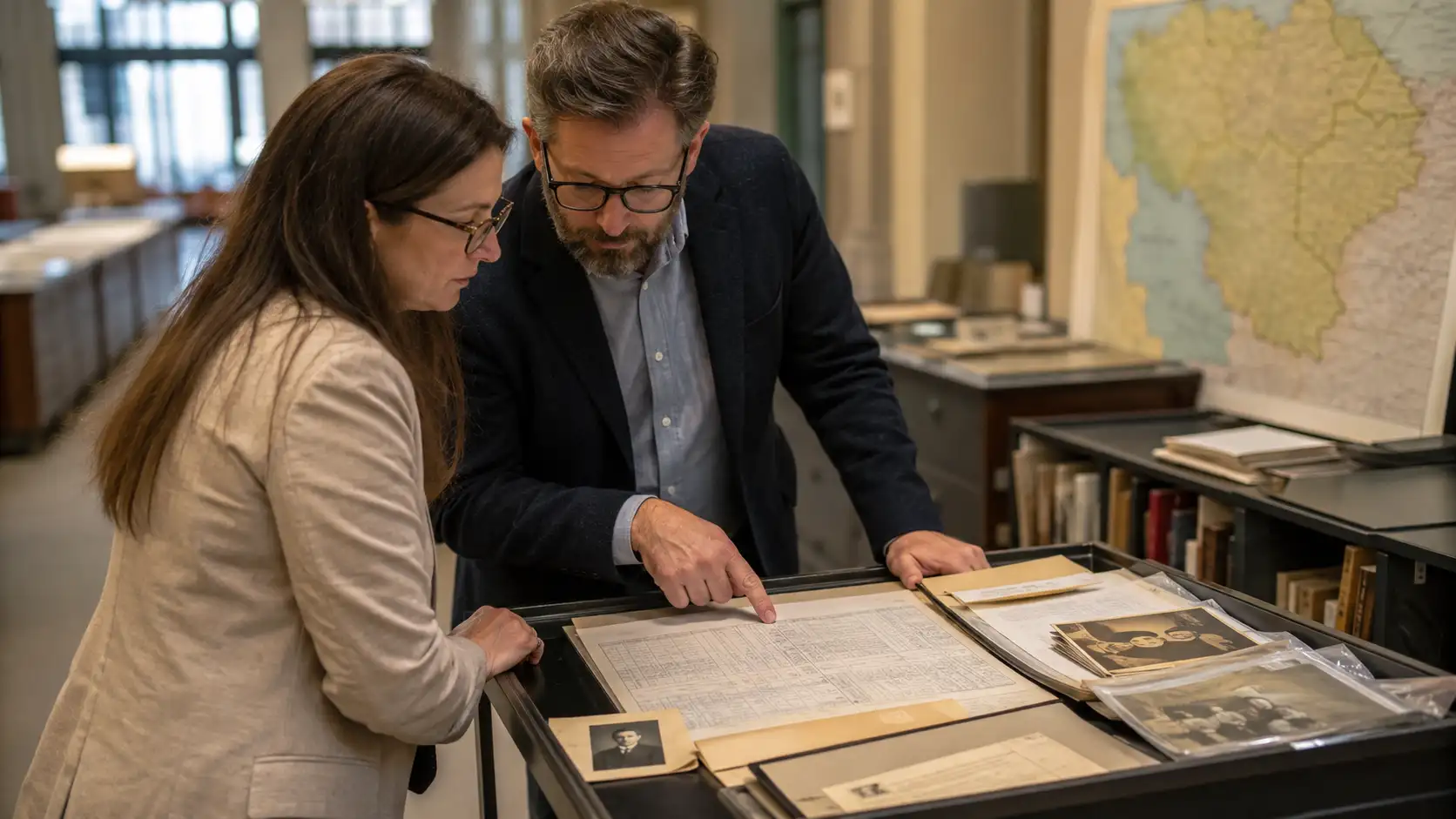
For many Americans exploring Lithuanian citizenship by descent, the first challenge is not the legal question itself, but the documentary trail. Families may know that a parent, grandparent, or great-grandparent came from Lithuania, but the surviving records may be scattered across U.S. archives, immigration files, church registers, naturalization records, and family papers.
U.S. census records can be a useful part of this research. They usually do not prove Lithuanian citizenship by themselves, and they are not a substitute for Lithuanian archive records or vital records showing the family line. However, they can help establish important context. In many cases, census records can identify a Lithuanian-born ancestor, connect family members within one household, confirm approximate immigration timelines, and show how nationality, birthplace, or naturalization status was recorded in the United States.
When used carefully, U.S. census records for Lithuanian citizenship by descent can support a broader evidence package. They may help explain name variations, locate missing records, confirm family relationships, and guide further research into naturalization files or Lithuanian historical documents.
Why U.S. Census Records Matter in Lithuanian Citizenship Research
Lithuanian citizenship restoration or citizenship by descent research often depends on proving several separate points. An applicant may need to show that an ancestor was connected to Lithuania, that the applicant descends from that ancestor, and that the historical facts fit the relevant citizenship rules. The exact requirements can depend on the applicant’s family history, the period when the ancestor lived, when the ancestor left Lithuania, and what documents can be obtained.
U.S. census records can help with the research stage because they provide recurring snapshots of a family over time. A Lithuanian immigrant may appear in the 1900, 1910, 1920, 1930, 1940, or 1950 census, depending on when they arrived and where they lived. Each census may contain slightly different information, but together they can create a timeline of residence, household structure, immigration, language, occupation, and reported place of birth.
For citizenship by descent cases, this is important because many applicants begin with incomplete family stories. A family may know that an ancestor was “from Lithuania,” but the records may list the birthplace as Russia, Poland, Lithuania, Kovno, Vilna, Suwalki, or another historical place name. Census records can help identify the pattern across decades and show whether the same person was consistently connected to Lithuanian ancestry or a historically Lithuanian region.
What U.S. Census Records Can Show About Lithuanian Immigrants
U.S. census records Lithuanian immigrants appear in may include several categories of information that are relevant for ancestry research. These records often list the person’s name, age, relationship to the head of household, marital status, occupation, place of residence, and place of birth. Depending on the census year, they may also include immigration year, naturalization status, language spoken, or parents’ places of birth.
This information can be useful when building a family chain. For example, a census record may show a Lithuanian-born grandfather living with his U.S.-born children. Another census may show that the same person had a spouse with a similar birthplace and children whose names match later birth or marriage records. This can help connect generations, especially when civil records use different spellings or when family members changed their names after immigration.
Lithuanian ancestry census records can also help identify where to search next. If a census indicates that an ancestor immigrated around a specific year, that detail may guide a search for passenger lists, naturalization records, Alien Registration Files, or local court records. If a census identifies a person as alien, naturalized, or having filed first papers, it may help determine whether a naturalization file exists and where it may be found.
Can Census Records Prove Lithuanian Citizenship by Descent?
Census records for citizenship by descent are usually supporting evidence, not primary proof of citizenship. A U.S. census entry was created for population enumeration, not for deciding Lithuanian legal status. The information was often based on household reporting, neighbor reporting, or the enumerator’s understanding. As a result, census records can contain mistakes, approximations, and inconsistent terminology.
For Lithuanian citizenship research, a census record may help prove Lithuanian ancestry or support the identification of an ancestor, but it may not be enough to prove that the ancestor was a citizen of the Republic of Lithuania before the relevant historical date. That question usually requires stronger evidence, such as Lithuanian archive records, passports, military documents, internal passports, identity papers, official residence records, or other documents that can connect the ancestor to Lithuanian citizenship or legal residence in the relevant period.
Still, U.S. census records for proof of ancestry can play a valuable role. They can help show that the person in U.S. records is the same person being researched in Lithuanian or European records. They can also support the continuity of the family line when combined with birth, marriage, death, and naturalization documents.
The Role of the 1940 Census for Lithuanian Immigrants
The 1940 census can be especially useful in Lithuanian genealogy census records research because it may capture immigrants who arrived before World War II and were still living in the United States before later family records became more standardized. For some families, the 1940 census may show an older Lithuanian-born ancestor living with adult children or grandchildren, which can help confirm household relationships and residence.
The 1940 census Lithuanian immigrants appear in may also include citizenship or naturalization information for foreign-born individuals. Depending on the entry, the record may indicate whether a person was naturalized, had first papers, was still an alien, or had an unclear status. This information should be treated carefully because it is not the same as a certified naturalization record. However, it can be a useful clue when deciding whether to search for a declaration of intention, petition for naturalization, certificate file, or other immigration record.
For Lithuanian citizenship by descent supporting documents, the 1940 census may be most useful when it helps place the ancestor in a clear timeline. It can show whether the person was already in the United States by 1940, where they lived, who lived with them, and whether their reported birthplace or naturalization status aligns with other records.
How to Use U.S. Census Records for Citizenship by Descent Research
The best way to use U.S. census records for citizenship by descent is to treat them as one layer of a broader documentary file. A single census record may be helpful, but a sequence of census records is usually stronger. Looking at the same person across multiple census years can reveal whether the reported birthplace, age, family members, immigration year, and name spelling remain consistent or change over time.
Researchers should begin with the most certain U.S. family member and work backward. For example, an applicant may start with a parent’s birth certificate, then a grandparent’s birth or marriage record, then a census record showing the grandparent as a child in the household of a Lithuanian-born parent. From there, the researcher may look for the immigrant ancestor’s naturalization file, passenger list, death certificate, marriage record, or Lithuanian archive record.
This step-by-step approach is important because citizenship by descent research depends on identity continuity. The goal is not only to find a Lithuanian-born person with the right surname, but to show that this person is the applicant’s direct ancestor. Census records can help connect the dots, but they should be supported by official vital records whenever possible.
What Details to Review in a Census Record
When reviewing U.S. census records for Lithuanian citizenship by descent, it is important to examine more than the indexed transcription. The original census image may contain details that are missing, abbreviated, or misread in the searchable database. Lithuanian surnames and place names are especially vulnerable to transcription errors because enumerators and indexers may not have recognized the original spelling.
The ancestor’s name should be compared across records, including possible Americanized versions, phonetic spellings, and shortened forms. A surname ending may have been dropped or simplified. A first name may appear in English, Polish, Russian, Yiddish, Lithuanian, or an Americanized version. These variations do not automatically make a record unusable, but they should be documented and explained through the full record set.
The place of birth also requires careful interpretation. In older U.S. records, Lithuanian immigrants were not always listed as born in “Lithuania.” Depending on the census year, political context, and family reporting, the birthplace may appear as Russia, Poland, Russian Poland, Lithuania, Kovno, Vilna, or another regional designation. This does not necessarily disprove Lithuanian ancestry. It may reflect the historical borders and administrative systems that existed when the ancestor was born or when the census was taken.
Common Limitations of U.S. Census Records
Census records are useful, but they have limitations. The information may not have been provided by the person being recorded. Ages may be approximate. Birthplaces may be generalized. Immigration years may shift from one census to another. Naturalization status may be incomplete or inaccurate. Names may be misspelled by the enumerator or later misread during indexing.
These limitations matter in citizenship research because government authorities may require reliable and consistent documentation. A census record that says an ancestor was born in Lithuania may support the case, but it usually needs to be matched with stronger records. If the census conflicts with other documents, the inconsistency may need to be explained through additional evidence.
Another limitation is that census records generally do not prove legal citizenship of Lithuania. They may show ancestry, residence, family relationships, or immigration clues, but Lithuanian citizenship status depends on historical legal and documentary questions. For that reason, census records should be used to support and guide research, not as the only foundation of a citizenship claim.
Census Records and Name Variations in Lithuanian Families
Name variation is one of the most common problems in Lithuanian citizenship research. U.S. census records may show different spellings of the same person’s name across different decades. This can happen because of phonetic spelling, language changes, handwriting, clerical errors, or informal Americanization after arrival in the United States.
For example, a Lithuanian surname may appear in a shortened form in one census, a Polish-influenced form in another record, and an English spelling in a later U.S. document. First names may also shift. Kazys may become Charles, Juozas may become Joseph, Ona may become Anna, and Jonas may become John. These changes are not unusual in immigrant family records.
For citizenship by descent research, the key issue is whether the records can still be linked to the same person and family line. Census records can help because they show household members, ages, spouse names, children’s names, residence, and occupation. Even if the surname changes slightly, the broader household pattern may support the conclusion that the records refer to the same ancestor.
Census Records and Proof of Lithuanian Ancestry
Proof of Lithuanian ancestry for citizenship usually requires more than a statement that a person was Lithuanian. The applicant generally needs to connect themselves to the ancestor through civil records and then support the ancestor’s historical connection to Lithuania through appropriate documents. U.S. census records can contribute to this process by showing the ancestor’s reported birthplace, family structure, and migration history.
For example, a census record may show that an applicant’s great-grandfather was born in Lithuania and lived with a son who later appears on the applicant’s grandparent’s birth certificate. This does not automatically prove Lithuanian citizenship, but it helps connect the family line and may point toward the correct Lithuanian archive search.
In some cases, census records may also help distinguish between people with similar names. If two men with similar Lithuanian surnames lived in the same city, the census may help separate them by age, spouse, children, occupation, address, or year of immigration. This can be important when building a clean evidence file.
How Census Records Fit With Other Supporting Documents
Lithuanian citizenship by descent supporting documents often include several categories of records. U.S. census records can work alongside birth certificates, marriage certificates, death certificates, naturalization files, passenger lists, Alien Registration Files, church records, military records, and Lithuanian archive documents.
The strongest files usually create a consistent chain. Civil records prove parent-child relationships. Immigration and naturalization records help explain when and how the ancestor came to the United States. Lithuanian or European records help establish the ancestor’s place of origin and possible citizenship status. Census records add context and help bridge gaps between these documents.
This is especially useful when official documents are incomplete or inconsistent. A census record may support a missing middle link, confirm that a child belonged to the correct household, or show that the family used a particular Americanized surname before later legal records adopted it. It may not replace a required certificate, but it can help explain the record trail.
When Census Records May Be Especially Helpful
Census records may be especially helpful when the family has limited documents from Lithuania or when the U.S. record trail contains conflicting information. They can also be useful when the ancestor’s birthplace appears under different country names because of historical border changes. In those cases, multiple census records may show a pattern that helps clarify the ancestor’s origin.
They may also help when a naturalization record needs to be located. If a census lists the person as naturalized, the researcher can search for a naturalization petition or certificate file. If the census lists the person as alien or having first papers, this may suggest that the person had not completed naturalization by that date. This information can be relevant because naturalization timing may affect how the family history is interpreted.
Census records can also help identify family members whose records may be easier to obtain. A sibling, spouse, or child listed in the same household may have a birth, marriage, death, or church record that contains a more precise birthplace or original surname. This can open additional research paths.
When Census Records Are Not Enough
Although census records can be useful, they are rarely enough on their own for a Lithuanian citizenship by descent case. A census entry is not a Lithuanian citizenship certificate, passport, or official Lithuanian archive record. It usually reflects what was reported in the United States at a particular moment in time.
If the only available evidence is a U.S. census record saying that an ancestor was born in Lithuania, the case may require additional research. The applicant may need to find records from Lithuanian archives, U.S. naturalization files, church registers, military documents, or other historical materials. The exact strategy depends on the ancestor’s life dates, place of origin, date of emigration, and the available family documents.
A careful approach is important. Overstating the value of a census record can create unrealistic expectations. It is better to use census records as part of a documented research path that leads toward stronger evidence.
Practical Research Approach for U.S.-Based Applicants
For U.S.-based applicants, census research should begin with known relatives and verified records. Start with the most recent generation and confirm each parent-child relationship through birth, marriage, and death records where possible. Then use census records to identify households and track the immigrant ancestor across decades.
Once the immigrant ancestor is identified, compare each census record with other U.S. documents. Look at naturalization records, passenger arrival records, draft registration cards, obituaries, cemetery records, church records, and Social Security-related records where available. If the census points to a Lithuanian birthplace or historical region, that information can guide archive research in Lithuania or in records connected to former imperial, Polish, or local administrative systems.
The final goal is to build a coherent documentary narrative. U.S. census records can support that narrative by showing who the ancestor was, where they lived, how they described their origin, and how they fit into the applicant’s family line.
FAQ
Are U.S. census records accepted as proof of Lithuanian citizenship by descent?
U.S. census records may be useful as supporting evidence, but they usually do not prove Lithuanian citizenship by themselves. They can help show ancestry, family relationships, birthplace, immigration timing, or naturalization clues. However, proof of Lithuanian citizenship or eligibility usually requires stronger documents, depending on the applicant’s situation and the applicable requirements.
Can a census record prove that my ancestor was Lithuanian?
A census record can support a claim of Lithuanian ancestry if it lists the ancestor’s birthplace, language, household, or family connections in a way that matches other records. However, census information may be incomplete or inaccurate. It is usually best used together with birth, marriage, death, naturalization, immigration, and archive records.
Why does my Lithuanian ancestor’s census record say Russia or Poland?
Many Lithuanian immigrants were recorded in U.S. documents according to the political geography of the time, the language used by the family, or the enumerator’s understanding. A person from a historically Lithuanian area may appear as born in Russia, Poland, Russian Poland, Lithuania, Kovno, Vilna, or another regional designation. This should be reviewed in context rather than treated as a simple contradiction.
Is the 1940 census useful for Lithuanian citizenship research?
The 1940 census can be useful because it may show Lithuanian-born immigrants, their household members, residence, and citizenship or naturalization status. It can help build a timeline and point toward naturalization or immigration records. However, it should usually be treated as supporting evidence rather than primary proof of Lithuanian citizenship.
What should I do if census records show different spellings of my family name?
Different spellings are common in Lithuanian genealogy census records. The same person’s name may appear in Lithuanian, Polish, Russian, Yiddish, English, or phonetic forms. The key is to compare the full record context, including age, spouse, children, address, occupation, immigration year, and other documents. If the records consistently point to the same person and family line, the variation may be explainable.
Can U.S. census records help find Lithuanian archive records?
Yes. Census records can provide clues such as approximate birth year, immigration period, family members, residence in the United States, and reported birthplace. These details may help narrow a search for Lithuanian archive records or related documents from historical regions. Census records are often a starting point for deeper research rather than the final proof.
Are census records useful if my family has no old Lithuanian passport?
Census records may still be useful if an old Lithuanian passport is unavailable. They can help identify the ancestor, connect generations, and support the search for other evidence. In many cases, applicants need to rely on a combination of U.S. records and Lithuanian or European archive documents rather than one single document.