
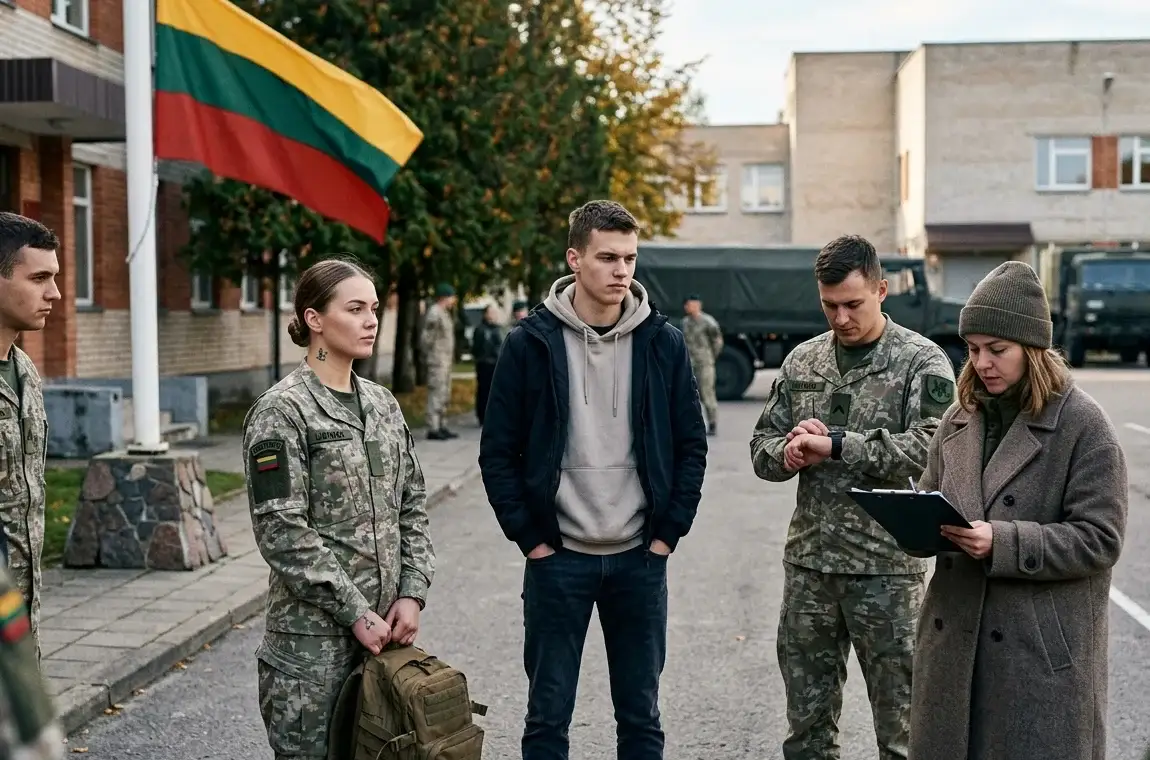
In January 2026, the issue of mandatory military service in Lithuania once again became critically important for young citizens, their parents, and families living outside the country. Questions arise especially often among people with dual citizenship, students abroad, and descendants of Lithuanian citizens who have restored or are planning to restore Lithuanian citizenship.
The main question is simple: does Lithuania have mandatory military service?
Yes, mandatory military service exists in Lithuania. And living abroad does not automatically cancel this obligation. If a person is a citizen of the Republic of Lithuania and falls within the criteria established by law, the state may treat that person as liable for military service regardless of whether they live in Lithuania, the United Kingdom, the United States, Canada, or another country.
Legal basis for military service in Lithuania
Before discussing deferments, medical grounds, or rules for citizens living abroad, it is important to understand the basic principle. Military duty is connected not to a person’s place of residence, language, or degree of cultural connection with Lithuania, but to the existence of Lithuanian citizenship.
Official materials from the Lithuanian conscription system indicate that conscription lists are formed annually, usually at the beginning of the calendar year, and selection is carried out using an electronic system. In 2026, a list of individuals subject to the conscription procedure was published on the official karys.lt website.
This means that the argument “I do not live in Lithuania” is not, by itself, an automatic exemption. For a Lithuanian citizen, it is important not to ignore their status, but to check in a timely manner whether they are included in the list and, if necessary, properly prepare the required documents.
How the conscription system changed in 2026
Lithuania restored conscription in 2015 against the background of growing regional security threats. Since then, the system has gradually developed, and by 2026 important changes had been introduced, including earlier conscription planning and a stronger focus on young citizens immediately after finishing school.
In 2026, priority shifted toward citizens aged 18 to 22. Official materials from Lithuanian military authorities indicate that young men are invited to perform mandatory initial military service after finishing school, specifically within this age range.
Previously, many families assumed that university enrollment or living abroad could effectively postpone the issue indefinitely. After the 2026 changes, that logic became much riskier. Enrolling in a university after being included in the list should no longer be viewed as a simple and reliable way to obtain a deferment.
Who is subject to conscription in Lithuania in 2026
The main risk category is young men who are Lithuanian citizens and are of conscription age. In 2026, the focus is on citizens aged 18 to 22. Older individuals may also be considered if they previously received a deferment on grounds related to education or other circumstances.
In practical terms, this means that a young man with a Lithuanian passport should check his status in the official lists. If his name appears on the conscription list, ignoring the situation does not solve the problem and only increases legal risks.
The lists are published at the beginning of the year. Checking one’s status is the responsibility of the citizen. In a system of digital administration, referring to lack of knowledge or the absence of a letter at an actual address abroad may prove to be a weak position.
Dual citizenship does not exempt a person from service
Having a second citizenship does not cancel obligations toward Lithuania. For the Lithuanian state, a person with a Lithuanian passport is treated as a citizen of the Republic of Lithuania. A second passport may be relevant for travel, residence, tax matters, or immigration status in another country, but in itself it is not an exemption from military duty.
This is especially important for families in the United States, the United Kingdom, Canada, Australia, and other countries where children or grandchildren of Lithuanian citizens may have a second citizenship by birth or after restoring Lithuanian citizenship. If such a person becomes a citizen of Lithuania, they receive not only rights connected with an EU passport, but also obligations established by Lithuanian law.
Therefore, before restoring citizenship or after obtaining it, it is important to assess in advance the person’s age, residence status, study plans, and possible obligations related to military service.
Living abroad is not an automatic exemption
Many citizens mistakenly believe that living outside Lithuania fully excludes them from the conscription system. This is the wrong approach. The mere fact of living in London, Chicago, Toronto, or another country does not mean that the state automatically stops treating a person as a citizen liable for military service.
For Lithuanian citizens living abroad, it is important to keep registration details accurate and respond to official notices. If an address is not updated or documents are ignored, the situation may move from an administrative issue into a more serious legal area.
In practice, many problems arise not because a person is included in the list, but because the response comes too late. A family may learn about the conscription from relatives in Lithuania, from a letter, through the website, or only when planning a trip. In such a situation, there is much less time left for calm preparation of documents.
How long mandatory service lasts
Standard mandatory initial military service in Lithuania lasts 9 months. Official materials from the Lithuanian Armed Forces also indicate that citizens of conscription age are invited to perform this service annually, and that the service forms part of the reserve training system.
In certain cases, other forms of service or training may be possible, but they should not be viewed as a universal substitute. Each option depends on age, status, health condition, education, and the specific decision of the competent authorities.
After completing service, a citizen is usually included in the reserve. This means that the matter does not always end with only nine months of service: military duty may continue within the reserve system.
Are exemptions and deferments possible?
Exemptions and deferments are possible, but they require real grounds and proper documentary preparation. A person should not assume that simple unwillingness to serve, a weak connection with Lithuania, or studying abroad will automatically resolve the issue.
Medical grounds are reviewed by a military medical commission. Confirmed illnesses or conditions that genuinely prevent service are relevant. Ordinary everyday complaints or poorly prepared medical certificates are usually not sufficient.
Education may also matter, but after the 2026 reforms this issue became stricter. A particularly risky situation is when a person is included in the list and then tries to use university enrollment as a way to avoid service. This scenario can no longer be considered reliable.
Alternative civilian service may be available in cases related to beliefs, but it is not a simple formality. It requires a separate procedure, justification, and readiness to perform the alternative obligation established by law.
What happens if conscription is ignored
Ignoring conscription is the riskiest scenario. If a person is included in the list and does not respond to state requirements, administrative fines, further legal measures, and complications in dealings with Lithuanian authorities may follow.
In more serious cases, evasion may lead to criminal-law consequences. Practical problems may also arise when crossing the border, traveling to Lithuania, or interacting with state authorities.
The strategy of “just not responding” is especially dangerous. It may temporarily create the illusion that the problem has disappeared, but in reality the legal risk continues to accumulate. The earlier a person checks their status and starts acting through the lawful procedure, the more options they have for resolving the issue properly.
What a Lithuanian citizen abroad should do
The first step is to check whether the person is included in the current conscription list. If the name is absent, this does not mean that the issue is closed forever, but it reduces the urgency for the current calendar year.
If the name is on the list, the person should not panic, but should assess the situation legally. It is important to understand the person’s age, place of residence, current study status, health condition, existence of notices, response deadlines, and possible grounds for deferment or exemption.
For citizens abroad, it is especially important not to delay with documents. Translations, medical confirmations, university certificates, registration details, and official correspondence all take time. Mistakes in deadlines or submission format may weaken the person’s position even when they have real grounds for a deferment.
Why this matters for people restoring Lithuanian citizenship
Lithuanian citizenship provides serious advantages: the right to live, work, and study in EU countries, protection by the Lithuanian state, and the ability to pass the status on to future generations. But citizenship is not only a passport and freedom of movement. It is also connected with obligations.
For families considering the restoration of Lithuanian citizenship for sons, grandsons, or young adult applicants, the issue of military service should be part of the preliminary legal assessment. This is especially important if the applicant is at or near conscription age.
A proper strategy does not mean refusing citizenship. It means understanding the consequences, timelines, and procedures before an urgent problem arises.
Do not ignore state notices
If you or your relative is a Lithuanian citizen and may be subject to conscription, you should not rely on outdated advice or random opinions from forums. The 2026 rules differ from previous practice, and mistakes may have real consequences.
The best approach is to check your status, collect documents, and act through legal mechanisms. Questions of deferment, medical exemption, residence abroad, and dual citizenship should be assessed individually.
On LithuanianCitizenship.com, you can find additional information about Lithuanian citizenship, dual citizenship, citizenship restoration, and the legal status of Lithuanian citizens living outside the country.
FAQ
Does Lithuania have mandatory military service?
Yes. Lithuania has mandatory initial military service for citizens who meet the criteria established by law. In 2026, particular attention is given to young citizens aged 18 to 22.
Does dual citizenship exempt a person from service in Lithuania?
No. A second citizenship does not in itself exempt a person from military duty. If a person is a citizen of the Republic of Lithuania, the state may treat that person as liable for military service regardless of whether they hold another passport.
Does living abroad exempt a person from conscription?
No. Living outside Lithuania is not an automatic exemption. A citizen must check their status, keep registration details accurate, and respond to official notices.
How long does mandatory military service in Lithuania last?
Standard mandatory initial military service lasts 9 months. In certain cases, other forms of training or service may exist, but they depend on the specific circumstances and decisions of the competent authorities.
What happens if a person ignores conscription?
Ignoring conscription may lead to fines, further legal measures, and complications when dealing with state authorities. In serious cases, criminal liability may be possible.